



If your driveway in Georgia keeps turning green, you are not alone. Our warm, humid climate is perfect for algae and grime. The fastest way to break the cycle is targeted concrete cleaning that removes buildup and treats the source so it does not return right away. This guide explains what causes the green film, where it shows up first, and how a smart maintenance plan keeps your concrete looking clean and bright longer.
What Is the Green Stuff on Georgia Concrete?
The green tint you see on driveways and walkways is usually algae. It thrives anywhere moisture lingers on a rough, porous surface. On concrete, tiny pits and pores act like mini planters that hold water, pollen, and dust. That mix becomes food for algae, and it spreads across shaded slabs and along edges where water collects.
Sometimes there is also a darker film that looks like mildew or a slick biofilm. Either way, the problem is the same: living growth fueled by moisture. Algae makes concrete slippery when wet, which is a safety concern for families and visitors.
Why Georgia’s Climate Supercharges Algae Growth
Georgia sits in a humid subtropical zone. Warm nights, frequent dew, afternoon pop-up showers, and thick tree canopies create a damp microclimate right on your driveway. Even a clean slab can green up fast when summer humidity peaks and pollen coats the surface like dusting sugar.
- High humidity keeps surface moisture from evaporating quickly.
- Afternoon shade from oaks and pines cools slabs so they stay damp longer.
- Irrigation overspray and gutter runoff feed water to the same spots day after day.
- Pollen and dust settle into concrete pores and become food for algae.
North-facing and tree-lined driveways tend to show green first. Low spots near the street, where road splash and stormwater collect, are also common trouble areas. Shaded and damp concrete will green up first, then spread outward in a patchy pattern.
How Professional Concrete Cleaning Stops the Cycle
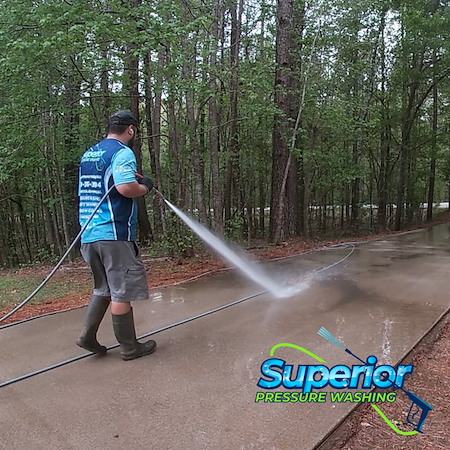
Brute force pressure alone often leaves behind the microscopic growth that causes stains to return. A professional approach starts by lifting organic buildup, neutralizing living growth, and then rinsing to a uniform finish. The goal is a clean surface with treated pores so regrowth slows down.
At Superior Pressure Washing Metro, trained technicians match water pressure, flow, heat, and cleaning solutions to your concrete’s age and condition. That protects surfaces, joints, and nearby plantings while producing a fresh, even appearance that lasts. Treating the spores is what prevents fast regrowth, which is why choosing experienced help matters in Georgia’s climate.
When the surface is properly cleaned, oils and road film release more readily, tire marks lighten, and the slab brightens overall. Edges and joints look crisp again, and the entire driveway reads cleaner from the curb.
Spots Most Likely To Turn Green On Your Property
Knowing where green shows up first helps you spot issues early and schedule service before stains spread.
- Shaded strip along the garage or side yard that sees little direct sun
- Bottom of the driveway near the street where runoff pools
- Walkway edges beside shrubs and mulch beds
- Concrete near downspouts and low gutter outlets
- Areas beneath parked vehicles where condensation drips
If these areas keep coming back green, your property likely has steady shade or frequent moisture. Redirecting a downspout or adjusting irrigation can help, but Georgia humidity will still push algae growth in the warm season.
Local insight: In Georgia, pollen season lays a sticky film on concrete. Pairing your spring cleaning right after peak pollen and again near late-summer humidity helps keep traction and curb appeal steady through the year.
Seasonal Game Plan For Concrete Cleaning In Georgia
Timing matters. Because Georgia has long warm seasons, a single annual cleaning may not hold through the thick of summer. A well-timed plan keeps surfaces presentable and safer while reducing how often algae can take hold.
Here is a simple, homeowner-friendly rhythm that fits most properties in our state:
Spring: After the heaviest pollen drops, a thorough clean clears the yellow film and resets the surface before summer humidity. Summer: Spot treatments and a maintenance rinse help fight mid-season algae on shaded sections. Fall: Clearing leaf stains and tannins keeps the slab from streaking. Winter growth slows, so a late fall clean often carries you to spring.
If you want help setting the schedule, our team can align service dates with your shade patterns, irrigation use, and runoff. Many Georgia homeowners prefer two visits per year, with targeted touch-ups for the green-prone strip along the edges.
What Sets Professional Results Apart
There is a clear difference between a quick rinse and a professional service. A skilled team looks at porosity, curing age, joint stability, and surrounding landscaping. They choose safe, effective solutions that neutralize organic growth, then rinse with even passes so the finish looks consistent from one edge to the other.
That expertise is also why many homeowners combine driveway care with other exterior cleaning tasks. If you plan to refresh siding or hardscapes, scheduling together can improve results and reduce disruption. Explore our pressure washing services to see how whole-home cleaning brings a crisp, uniform look to your property.
Edges matter too. Where concrete meets grass or mulch, organic debris builds up fast. Pairing cleaning with light trimming and tidy bed lines reduces new grime. If you are updating curb appeal, coordinating with your landscaping team helps keep edges sharp and the driveway bright.
Building A Preventative Maintenance Plan
A preventative maintenance plan keeps algae from getting a foothold and stretches the time between full cleanings. For Georgia homes, that usually means a primary clean after heavy pollen, a mid- to late-summer check-in for shaded strips, and a leaf-stain reset in the fall. Your plan might look a little different depending on tree cover, traffic, and irrigation habits.
We can tailor a simple schedule that fits your property and budget. The goal is to cut down on repeat stains and keep traction high during wet months. When you contact Superior Pressure Washing Metro, ask about setting a recurring visit that focuses on the green-prone sections first. This targeted approach makes each visit faster and maintains curb appeal with less effort.
If you are researching options, bookmark concrete cleaning in Georgia and compare before-and-after photos. Consistent, even results across the entire slab tell you a lot about a provider’s quality and attention to detail.
Safety, Plants, And Your Property
Homeowners often worry about plants, runoff, and the safety of cleaning solutions. A careful team shields sensitive shrubs, works with controlled application, and uses measured rinses to protect your beds and lawn. The process is designed for your property, not the other way around.
Another common concern is surface wear. The right technique balances pressure and flow so joints and finish are respected while contaminants are lifted. That is one reason professional work tends to last longer and look more uniform, even on older slabs with light pitting or broom finishes.
Signs It’s Time To Schedule Service
You do not need to wait for the whole driveway to go green. Watch for a half-shaded stripe darkening near the garage, a slippery spot by the mailbox after rain, or dark halos around expansion joints. These are early signals that algae is active and moisture is lingering.
If traction feels slick underfoot or if tire marks seem to set faster than usual, schedule a cleaning before summer humidity peaks. Taking care of it early keeps the problem small and helps your concrete resist new growth longer.
Why Choose Superior Pressure Washing Metro For Georgia Concrete
Local climate knowledge matters. Our team understands how Georgia weather patterns, shade, and pollen work together to feed algae on concrete. We plan around your property’s sun exposure and runoff and deliver a bright, even finish that holds up through the season.
From first look to final rinse, you get clear communication and careful work around your home and plantings. If you want a reliable routine, we will set a simple cadence that stays ahead of the green film and keeps your driveway looking great for guests, deliveries, and weekend projects.
Want to see how a strategic approach changes your curb appeal? Learn how our professional concrete cleaning helps Georgia homeowners control algae and keep walkways safer in wet weather.
Ready For A Cleaner, Safer Driveway?
If your concrete is already turning green or getting slick in the shade, let the pros handle it. When you are evaluating options, remember that Georgia’s humidity rewards a steady plan, not a one-time rinse.
We keep it simple. You get clear scheduling, careful protection for plants, and results that last. Reach out today and ask about a preventative maintenance plan that matches your property’s shade and runoff. Your driveway can stay brighter, safer, and greener only where the lawn belongs.